Live In The Moment At A Moment’s Notice

No matter how cynical I am about the modern phenomena and dilemma – information overload, short attention span and time poor, I can’t seem to deny (nor ignore) the fact that they are fast dominating almost all corners of the world. Nevertheless, I believe the ultimate power lies within self – our ability to switch off!

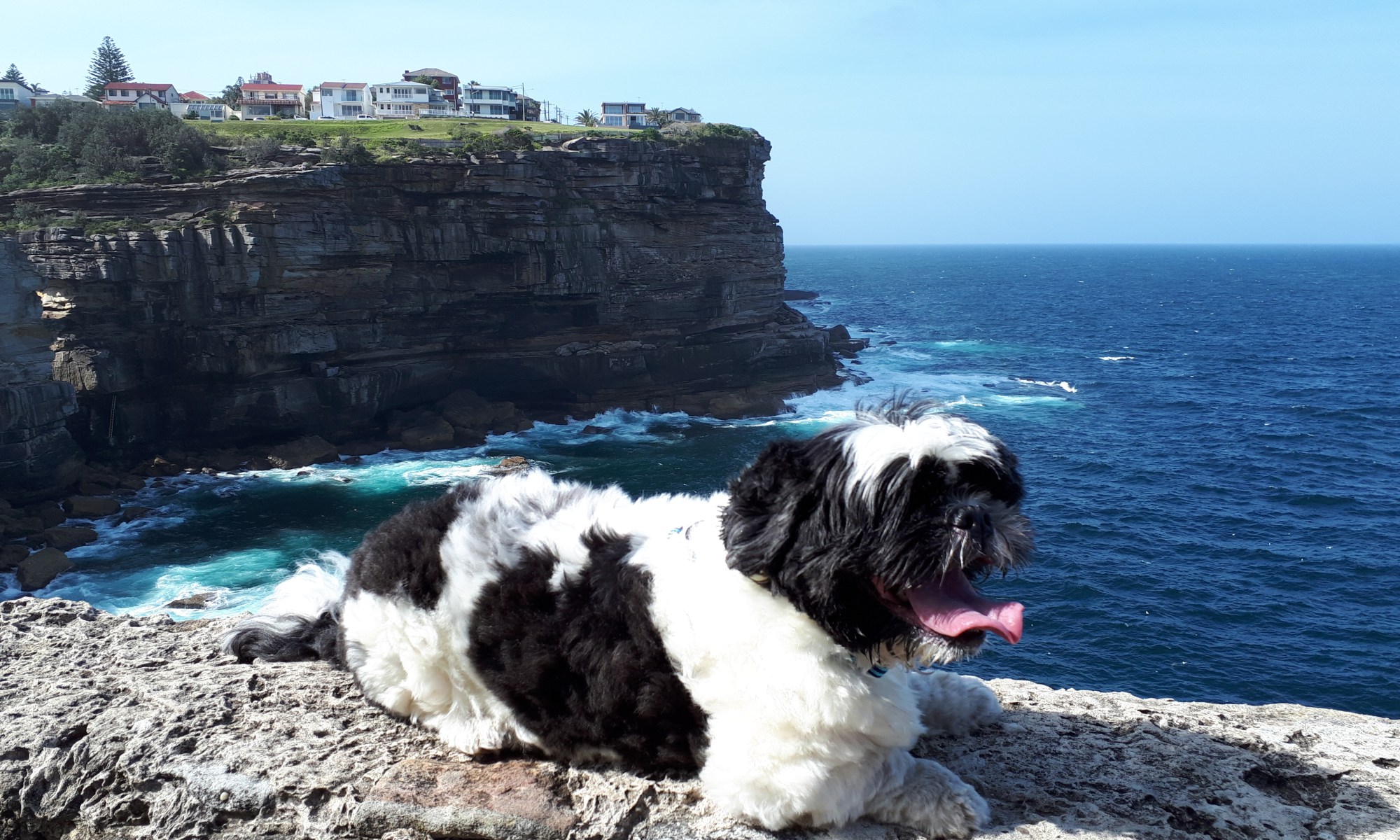
These days the concept of “less is more” serves me reasonably well. Too much talking or attention seeking can be exhausting. Still managed to spare a few hours on this Sunday afternoon to hit the outdoors. Of course, in the company of my fury kid Jamie. We two are like inseparable unity, living in each other’s pockets. Often our language doesn’t require words. Sometimes it’s non-verbal cues that speak loudest.

This walk from Clovelly Beach in Sydney’s eastern suburbs, provided me with a temporary escape from the hustle and bustle of the city life. It was picturesque. After reaching Dunningham Reserve nearby, already there was a good number of people sitting on the grass as if they were waiting for a music festival or some concert to kick off but none of them was even talking.

Interestingly, in unison, they were all showing a sign of peace, contentment and appreciation on their faces – a total contrast to the opposite side Coogee beach. It was strangely powerful. I am not a people watching person but was so intrigued by it that I went to check what was going on. Then I realized they were all in the moment, totally in sync with the surrounds – the sea breeze, sunshine, waves, blue skies etc. It was infectious… Time stood still I didn’t know for how long until Jamie gave me a light twitch, as if he was saying: Hey boss, Enough! it’s time to keep moving. Yes, I got your message Jamie! Let’s go! We walked further up and up, completed the round trip then went home. Simple and good!

Be A Re-Builder Of Your Life

The most resilient people I’ve come across, they don’t even have time to talk about resilience. What do they do? They smile, they keep their heads down, they work, they get on with life. It’s in their lifestyle, in their daily habit. Sometimes they stay that way because it’s the only way.

Where does resilience come from? Call it coping mechanism if you like. Where is it when you need it most? Does it live in La La land? Perhaps it’s tricking you, leading you on, playing hide and seek with you. Overall, they say resilience is within you. Sure! Very convenient! Always easier said than done. If you’ve come this far and you’re already yawning or rolling your eyes, I don’t blame you. Resilience sounds like a buzzword but is it just another cliché to bore you to sleep?

If you buy into what resilience has to offer, then brace yourself for some good news and bad news. The good news is resilience is something you already have. You don’t need to rely on others to give it to you. The bad news is we often look externally. Only later (rather than sooner), do we realize it wasn’t out there in the first place. Sometimes we just have to learn the hard way.

So, after a rejection, after a failure, after a defeat, after a setback, after a mishap, or after a bad luck, how do you bounce back, regroup yourself and rebuild your life, your relationship, your business, your career, your health or whatever you hold dear?

In September 2006, my former partner and I went travelling to a small town called Khao Lak in Thailand. The first half of the trip was for business – attending an HR conference, hosted by Cisco, the company he worked for then. The second half was for pleasure – touring around Phuket and surrounds.

Unlike Bangkok or Phuket, Khao Lak wasn’t as touristy and crowded. With my limited knowledge, I didn’t really know what to expect before I arrived there. A bit flashback: Khao Lak was one of the areas hit hard by tsunami back in December 2004. Before the trip began, I told myself I’m going to a small village in a developing country, don’t expect too much. It won’t be like living a life on a fast lane that kind of thing.

In case you’re wondering, part of the reason why Khoa Lak (as opposed to other more popular places) was chosen as the conference venue was to inject much-needed capital to the local economy. Because of this idea that we were doing it for a good cause and with good intentions, it’d make the whole trip extra special and meaningful, right? Not exactly! A few individuals weren’t so enthusiastic. I overheard that they felt either reluctant or compelled to stay in a place that was recently devastated by a natural disaster. I guess it is understandable. We’re only humans. After all, the area was declared as a disaster zone. Only less than two years ago, the powerful tsunami came so fast and without warning, it literally wiped out the coastal town within minutes. The catastrophe sadly resulted in thousands of lives lost including the locals and the tourists.

Fears aside. The journey began…

As soon as I set foot in the land, the air, the humidity felt and smelt different. That’s when you realise Wow you’re in a foreign country!

It was a monsoon season I remember clearly and on the day we arrived, there was a heavy rainfall down where we were heading. The wet weather could’ve been a big turn off, but it did nothing to dampen my excitement to be there. I was on a holiday mode! I got plenty of time!

Le Meridien Resort, our conference venue, was more remote and further away than I’d anticipated. From where we got picked up at Phuket International Airport to the resort was about a 2-3 hour trip by car.

Some might’ve thought the transport was such a drag and decided to have a quick nap whereas I quite enjoyed the views along the way. They reminded me very much of the Southern part of Taiwan in the early 70’s, where I spent my childhood on. It was this instant connection that kept me engaged, entertained and wanting more.

It was sightseeing to remember. I saw a woman riding a motorbike in the next lane. She was wearing a helmet and a big yellow raincoat enough to cover herself and her fellow passenger, a little kid sitting in the backseat. With the gusty wind coming from all directions at a 45-degree angle, they got wet all over. But they still carried on as if it was business as usual. I felt very fortunate to be in the comfort of this air-conditioned coach.

Also driving passed us by were a couple of utes with people sitting in the tray uncovered. The rain continued to fall, it soaked through their clothing but there was no sign of Hey, look at me, I’m suffering on their faces. They just held on. To them, it was all in a day’s work.

Upon our arrival at the resort, the hotel staff were very attentive to our needs and enquiries. I’ll never forget the welcoming refreshments served in the lobby. The Thai style drink was my first experience. It was so refreshing that I even requested a re-fill immediately after I’d finished the first glass. I was very impressed with everything. I couldn’t have asked for a better reception – the hospitality of the resort staff, front and back, the meticulous presentation of the resort rooms, facilities and resturants was the first class. Who would’ve guessed that it was nearly ruined by the tsunami less than 2 years ago?

During my one week stay there, I got a chance to speak with a few resort staff about the impacts of the tsunami on their lives. At first, I wasn’t sure if I’d make them uncomfortable, but I wasn’t quite surprised that they weren’t shy away from talking about it. One guy even pointed out to me where the sea water flowed and how high the it went right where we were in the hall.

If what they’d gone through isn’t enough to raise a few eyebrows, then read this. Well into our second week, in the national capital there was a military coup aimed at bringing down the then Prime Minister Thaksin Shinawatra and the cabinet. The army successfully controlled the government and ordered to shut down the national TV network. I remember that day when we turned on the television, it was all fuzzy, there was no pictures on the screen. The event sent shock wave across the globe and all of sudden we felt like we were cut from the outside world. It didn’t take long before our friends and families learned about the situation we were facing here. Khao Lak, however, far away from where the coup took place, the life was still as peaceful as ever. While we were busy reporting back to our loved ones and say we’re OK, the locals, took it quite casually. They treated it like just another day. To them, the coup wasn’t the first time and certainly won’t be the last. Not everyone copes with stress the same way. For people who have never experienced political unrest or aren’t used to this kind of thing, it can be hard. I know one teammate suffered a mental break down. It was so bad that he had to cut the business trip short and fly back home the next day to be with his family.

Resilience, resilience, resilience. Sounds like a good mantra to have. Where do we start? Or should I say where do we stop? The story of our Khao Lak trip provides a great example – There’s something we can learn about how the locals dealt with the aftermath.

What is it?

Stop the victim mentality! But how? Time to rewind and unwind. The answer lies in the question of: How did you start the victim mentality in the first place? Unpack it, undo it from there. Be more than a survivor, be a re-builder of your life…

Bon voyage!

Smell A Bad Influence? Just Follow Your Nose!

The nose knows it first. But before you realize it, you’re already in it.

The nose is a sensitive organ. Among all five senses, the nose is the first to detect what’s around us when we wake up in the morning. So acute and complex, in times like the cold and flu season, we’re prone to catch the tiny bad viruses that are spreading around. Once we breathe them in, they can stir up our immune system, cause an infection to our body and make us sick for days. When it comes to protecting physical health, we know we should keep our hands clean and avoid coming into contact with those harmful viruses. But when it comes to safeguarding emotional well-being, what should we put on a watch list?

Speaking of smell, I’m not particularly a big fan for strong perfume, no matter how expensive or how exclusive the brand is. When it gets too much, it becomes like a pest, a nuisance. Other people may have a different take on that but that’s OK.

This morning, just like any other mornings, when I got out of the door, I smelled the same type of perfume in the air. It was very much in-your-face. So overpowering that it lingered around the complex and even all the way down to the street level, roughly some 150 meters away from my place. There was really no one to be seen at that time except a few cars driving passed. Thankfully, the scent (or smell I’d rather call it) started to subside before I headed to the main road where the bus stop was. Again, I was amazed (and slightly annoyed) by just how far the fragrance could travel. As to who might’ve been the carrier (or offender), I’m afraid it’ll probably be a mystery forever.

Imagine, a bad influence is like bad smell in disguise. To elaborate, I’ll reference a former colleague of mine at Fairfax Media, Sydney – Rose. She’s one of most outspoken people, a don’t-talk-shit-to-me friend I’ve come across. We gelled very well on many levels, both professionally and personally. She often shared some important lessons in life with me during our chitchat moments at work. One that stood out most and something she said repeatedly was: Ted, negative people are a bad influence, they’re like bed smell, you’d better run away from them, or they’ll drag you down and make you part of their tribe, well before you have time to escape. Point-blank, plain and simple. Well said and point taken!

How far can a bad influence go? Just the other night, I was watching a presentation on YouTube, The Surprising Power of Small Habits given by James Clear. He’s the author of a best-selling book Atomic Habits: An Easy & Proven Way to Build Good Habits and Break Bad Ones. It was quite refreshing to hear many valid points he raised and one that struck me more than anything else was when he said: “the people that we surround ourselves with dictate our habits and behaviour even if they’re not physically by us.” Isn’t that scary? Time for a reality check.

Whether it’s like attracts like or opposites attract, whichever the law of attraction you buy into, somewhere along the line, we all can be influenced by each other in either a positive or negative way. Here’s a typical case of a bad influence. I used to know someone who swore a lot when driving, especially in a lousy traffic condition. At first, I thought he was a bit over-reacting. Funnily enough, over time I found myself doing the same thing as he did. I’d be in my driver’s seat showing the bird, shouting four letter words, yelling at those mad drivers on the road. It was contagious indeed. Mind you, that was a long time ago.

So, you think you smell a bad influence somewhere? Or maybe you’ve lived through it or got used to it? Don’t sit there feeling suffocated. You can’t literally hold your breath forever. What can you do about it? The answer is probably under your nose already! Treat it like bad smell! The power is in your legs! Exercise the power of walking away. It doesn’t matter if you were there first. Your welfare is more important. And, if you’re convinced, one thing to remember is, when you’re walking away from a bad influence, you’re in fact walking towards a good influence on the other end…

Can’t See The Bright Side? Try To See The Light Side!

When asked if you were an animal, what would you rather be? Madonna said she’d rather be a dog. Just to be 100% precise, I think she meant to say a bitch. If the same question in reverse goes to my dog Jamie, I believe he’d most likely say: a comedian.

So, I’ve been on this writing journey for 19 months now. You’ve seen me talk fondly about building life skills and all that. To my amazement, I’ve covered quite a range of serious topics. Have I bored you to tears already? In case I have, well, now to your amusement, I thought I’d change gears and write a different type of blog post this time – a joke, a real one. It’ll serve as a reminder for me that laughter is also an essential part of building life skills.

Telling a joke here is kind of outside my genre I’ve been known for, but hey I’ve also been known for being unpredictable. To be a creative person, the only rule is there’s no rulebook to follow.

I picked the title “Can’t See The Bright Side? Try To See The Light Side!” for a reason. Let’s face it, when shit happens and when you’re in the thick of it, one of the hardest things to do is to stay positive. True? Fair enough, if it’s not possible to see the bright side, why not try to see the light side instead? Laugh at life! Laugh at your problems, laugh at your misfortunes, laugh at your imperfections, even better laugh at yourself!

Speaking of laughter, it’s funny, remember those so-called miracle cream and anti-aging skin care products you see everywhere on the shelves at a super market or some cosmetic counters in a department store? Read the instructions on the package. They all promise to give you a flawless complexion in days or weeks. Use me and I’ll reduce your frown lines, wrinkles, and crow’s feet. But, have you ever noticed that none of them claims to reduce your laugh lines? Very smart indeed. They must’ve had a team of cool copy writers working tirelessly behind the scenes. Most people don’t mind having a bit laugh lines I would say. They are like traces of happy times on the face. Why would we want to get rid of them? If their products were marketed in that direction, it’d seriously turn people off. From miracle cream to miserable cream, why would we want to use something like that?

Enough said, are you ready for the joke? Here it is:

A few years ago, an ex-colleague of mine complained to me about her new smart phone. It kept her up all night as it just couldn’t stop vibrating for no apparent reason. She’d already tried to change the settings herself several times but without success so she came to me for help. “Ted, can you please fix it for me?” She asked. I paused for a few seconds before my cheeky side started to take over. Hmmm… I held it eventually. I didn’t say a word till the next day: Are you sure it was your smart phone?

Funny or not, I hope you had a good laugh and embraced the subtle art of not giving a bark like my dog does. For now, my job is done. I’m moving on. Till next time… Keep on laughing!

A Leading Follower

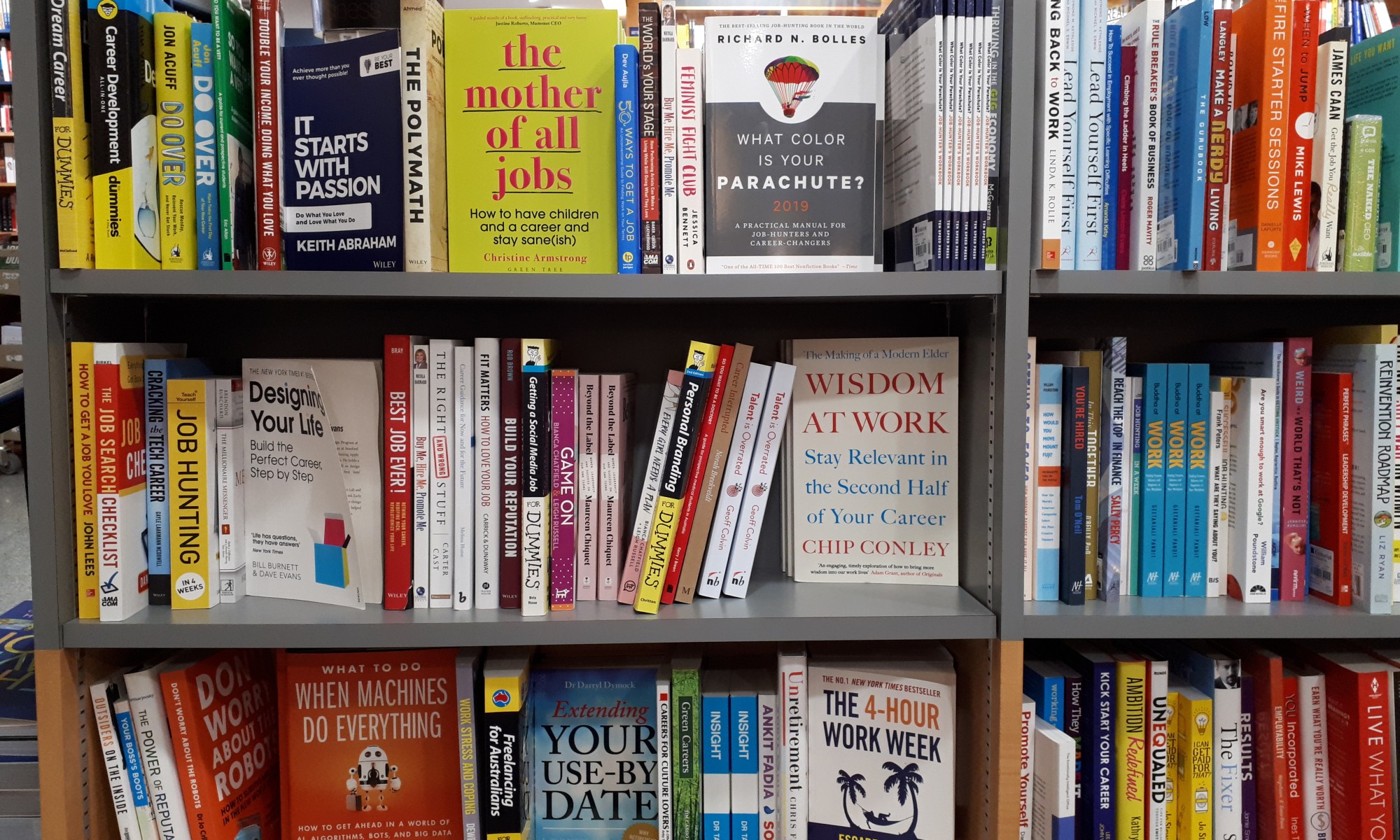
So much has been said about leadership. If you step into a bookstore, head over to a business/management section, what would you see? I bet you wouldn’t have any trouble finding books about how to be an effective leader. Funnily enough, I’ve yet to see a book about how to be an effective follower. What does that tell us? Leadership means business! Those publishers aren’t stupid. They don’t waste time and energy on something if they see no demands or popularity for it. Clearly, there’s a huge market for people wanting to cultivate leadership and inject it into their professional life. No one can argue that leadership is one of the highly sought-after skills we admire and look to improve on. Rightly so, but just because you want it, doesn’t mean you can have it if you don’t have what it takes to get there.

Are you a leader material? What if you are not, what does that leave you? Will it say something less about you? Don’t despair!

Well, who wouldn’t want to see their name sitting on the top of an organisational chart? Who wouldn’t want to be in a position of trust, power and authority and have a plenty of staff under him/her? The truth is there’s only limited availability for the leadership or C level executives. If someone must lead, then someone else must follow, right? The question of whether leaders are born or made, it’s highly debatable and will remain so as long as people have different opinions. One thing is for sure though, you need to have a thing about leadership. It’s earned, not given to you automatically.

What if one day you wake up and realize you’ve been barking up the wrong tree? All things considered, you come to this conclusion that you’re better at being a follower than a leader. Is there anything wrong with it? Here’s my awakening moment to share with you.

Last Friday, during a team breakfast just like all other occasions, my CEO presented us with a business update. I knew he wasn’t big on surprises, so I never expected one from him. But right before he finished it, I noticed something intriguing around him. He was holding a few envelops on one hand. The first one got my name on it. I had a few giggles inside. I couldn’t wait to find out if he’d got something for me. Yes, he did. He called my name and gave me a small reward in front of all staff. I was praised for “stepping up to help other team when required.” It was nice to be recognised by him – someone who has the final say in my career progression and pay increases. I was humble and grateful for it. This recognition has re-validated one of my core strengths – the ability to follow directions and execute orders – an essential attribute for a good team player, an effective follower. Right there and then, for the first time, I was totally fine with being a supportive role and proud of it.

Being a people pleaser and a care taker type of person myself, in some way I’m probably destined for becoming a follower, rather than a leader. If leadership isn’t my department, I’m willing to let go of it and pursue something that’s more in line with what’s in my “nature” – followership. In the past, I would’ve seen followership as a flaw in personality traits but now I see it as a different type of character strength. I’d love to be that guy running the show but at the same time, I don’t think I’m thick-skinned enough to be a star in the limelight for too long and too often.

Interestingly, just the other day, I heard someone say on a podcast that a follower is more important than a leader. It gave a lot of food for thought. My bias and favoritism towards leadership was swayed by it much more than I’d like to admit. But deep down I still held that thought – leaders are for the strong people, followers are for the weak people. A very black-and-white thinking. Then today I went to ask someone in a leadership position about which one is more important, I got quite a good insight from him which I’ll summary it below with a touch of my own take on it.

Here’s the thing. Some are more suited for being followers, some are more suited for being leaders. There’s nothing wrong with being a follower if you don’t end up becoming a leader or simply don’t have an appetite for leadership from the start. No matter which role you play, the most important thing is: You play it well and you’re good at what you’re doing…

I’ll call myself a leading follower… You?

When Love Wins, Who’s Going To Lose?

Love is love? Is love enough to make a law change? In very few cases Yes, in most cases No. At least it’s true in the context of marriage equality. Last count, there’re 28 nations in the world recognise same sex marriage. The latest one that has joined the ranks is Taiwan. Born and bred there, I cannot be more proud.

When a small player like Taiwan is seen on the news headlines, most of time it’s for the wrong reason. Oh No, not another round of diplomatic setback. The country’s lack of support from the international community is well known. But in the last two weeks. On 17 May 2019, when Taiwan became the first country in Asia to legalise same sex marriage, there was an outpouring of praises following it. This milestone sent shock waves across the world and make people take notice. To be politically correct or politically incorrect depending on where you stand, some news sites referenced Taiwan’s sovereignty very carefully. After all, who dares to upset Chinese communist party and their One China Principle? The first “place” in Asia to legalise same sex marriage is probably what has been written in the news. Don’t get me started or I’ll sound too political here. Anyway, moving forward, whether people agree or disagree, like it or not, the law has been passed. Yes, it’s done but doesn’t it mean it’s over?

The road to clear the final hurdle has been long and hard. Mr Chi Chia-Wei, unknown to the west, is a first openly gay man and a veteran gay rights activist in Taiwan. He’s now a 60-year-old man. Last time I saw him on TV, I was struck by how skinny he looked and how much grey hair he got. Stress must’ve done something to him. Back in 1986, some 33 years ago, he was the first person to step up to advocate gay rights. It was no doubt a brave thing to do after all people in the 80’s were far more conservative than people today.

When Chi Chia-Wei went to apply for a marriage certificate at the local council, he was refused by the authorities on the grounds that his partner wasn’t a she. From there, he wouldn’t have thought that it’d become decades of fight for marriage equality. In mid 2017, at last, there was a glimpse of hope. The matter was taken to the Taiwan’s constitutional court for interpretation. On the day when he was in the court room facing the constitutional judge, he looked frail. I can’t image what was going through his mind. Most believed it was the last resort and a do or die situation. Outside the court room, it was just as dramatic as the inside. Both sides of supporters for and against marriage equality had been waiting for this moment. When the verdict was read out, we heard a loud cheer from one side of the groups. Yes, the judge was in favour of marriage equality. It said to deny a same sex couple the right to marry is unconstitutional. Taiwan’s lawmakers must in two years make it a law or it’ll automatically become one on 24 May 2019.

The case was won for the LGBT community, but it was short-lived. Only a year later, the LGBT campaigners faced another uphill battle. They suffered a major blow from the referendum results in 2018. An overwhelming number of Taiwanese voters didn’t wish to see the marriage law changed. What it left with for the government was to find a middle ground between the judge’s verdict and the referendum outcome. But with the opposition groups gaining the upper hand from the No votes, there was a call/demand for the word “marriage” to be removed from the context and replacing it with something less significant to formalise their “partnership”, separate from the existing marriage law.

Following almost 2 years of inaction by the government, with the deadline fast approaching, the bill was finally drafted and sent to the Legislative Yuan for review. The word “marriage” was retained under the bill. It also gave same sex married couples similar rights as heterosexual married couples. The move angered the opposition groups calling it a disrespect for the referendum results.

Against the odds, the bill was passed without amendments. The anti same sex marriage sentiment from the opposition groups went from bad to worse. This time they vowed to overturn the law, punish those legislative members who voted yes on the bill, sack the constitutional judge and bring down the government in the next presidential election in 2020. Well, what can I say? It just got uglier every time I looked at it. Good luck to them.

The pen that was used by President Tsai Ing-Wen to sign marriage equality into law was given to Mr Chi Chia Wei as a gift for his contributions to the gay rights movement in Taiwan. It was a symbolic gesture and a good closure to a long battle lasted for decades and caused so much pain to the LGBT community. Now it’s time for healing. When a battle is over, there’re always winners and losers. When love wins, who’s going to lose? Calling on fears, hate, and prejudice out there, get your white flag ready! Get your loser’s speech prepared. Because you’re losing ground…

What Do You Have That I Don’t Have?

Have you ever wondered why some people seem to live a better life, have a better job, a better income, a better partner, a better house? Perhaps they just have a better luck or even a better problem! Better this and better that, whatever takes your fancy, you may begin to ask yourself: What do they have that I don’t have? Scrolling through pages of posts published on social media, we can easily see evidence of “We live in a result-driven, an outcome-obsessed society.” It’s all about the end product. We only get to see people cross the finishing line, but not the hard work that goes into it, which is often done behind the scenes. Nevertheless, we believe what we see on the outside is what we get from the inside. After all, seeing is believing. What’s wrong with it? Let’s dive in…

Perhaps you’re in a middle of doing housework, feeling a bit tired and bored, you decide to give yourself a break. You go to your smartphone, open the Facebook or Instagram app, there you are, before you know it, you’re already bombarded by friends’ posts and updates – travel photos taken from an exotic tropical island in the Pacific, some historical places in Europe or those bustling streets in East Asia. How do you feel? You may give it a like or a heart then move on? You may leave a nice comment and carry on your day to day stuff. You may get a little jealous or envious of them, then start to wonder: Why am I doing here at home in my PJ while they’re there living it up and having a great time? The adage: A picture is worth a thousand words is true in many cases. We can all agree on that. However, I’d argue a picture isn’t always representing a full picture. Don’t be surprise if there’s more to it than meets the eye. When people share their happy holiday photos on line, it’s all about the highlight. Rarely do they mention the lowlight. For example, would they tell the world that their flight got delayed for hours or they sat next to an annoying passenger or in front of a noisy jerk on a plane for 9 hours? Would they rant and rave about having a bad customer experience at a store, or having some awful food in a restaurant or having an upset stomach or diarrhea only one day after arriving at the resort? Those unexpected mishaps and dramas are kept to themselves, in private. We all like showcasing our best parts of everything to everyone. It’s only human nature. But if we as viewers are led to believe that’s all there to it, we are missing out on “a whole picture”. The feeling of inadequacy will soon find a chance to creep into our mind.

How do we gain more perspectives so that we don’t get sucked into that feeling of inadequacy? I understand if you have the urge to fill that hole or an empty space inside of you with stimuli. I’ve been there. Many times. Countless times. To counter that, I’ve come up with a good strategy to keep myself in check (like writing this blog post). We all can avoid the danger of taking something only at face value and missing the point. Try to deconstruct the myth layer by layer. In my case, as a reasonably newcomer to the blogging scene, I’m still like a new kid on the block. It’d be easy for me to feel inadequate compared with those popular bloggers out there, who have long established themselves as badass writers in their chosen fields. On the outside, fame, successes, hundreds and thousands of followers and likes etc are filling up their public domain. There’s no shortage of “good fortune”. But they got to where they’re today for a reason. It comes at a cost. It’s not free. it’s not all glam. On the inside, they’ve done the work to get them there and they continue to do the work to keep them there.

Then, just the other day, a friend of mine revealed to me that her marriage was on the rocks until she talked her husband into getting a counselling. I wouldn’t have thought that. A side of her that I didn’t know existed. It was nowhere near a portrait of her happy life on Facebook I’d seen –  enough to make her friends envious or jealous. What’s the matter? It’s not that people live a double-life, it’s just there’s a different life behind a curated library of photos we are yet to see. What I’ve learnt from this is: Not too quick to judge what I see in an instant.

Whether it’s people’s success or happiness that makes you feel inadequate, or the high life they constantly brag about gets on your nerves, stop and look out for the flip side – there’s an untold story waiting to be discovered. To complete this post, I’ll leave it with an advice I received from an ex colleague of mine at Fairfax Media. Those three wonderful little words: Work at it…

Give Bullies A Boo

A mother was heartbroken.

There she was talking explicitly about her pain and anguish in front of the TV reporters. As a way of protecting her privacy, she wore a white surgical mask to hide her identity. Even so, the cameras were able to zoom in on her and capture the sadness in her eyes. It was written all over her face.

What’d happened? Why was she so upset? It’s a call no parents will ever want to receive. An episode no parents will ever want to go through in their life. In an apparent suicide attempt, her teenage son was seen jump out of the school building to kill himself. Fortunately, he didn’t die at the scene. But he was seriously injured to the lower part of his body as later announced by hospital.

School did all they could – called an ambulance. He was quickly taken to a hospital emergency department for an urgent treatment. His mother rushed to the ward to be by his bed side, watch him fighting for his life. The hospital setting, the medical staff running around, No, it wasn’t one of prime-time soap operas, it was a real news on TV last week in Taiwan.

Believe or not, his self-harm didn’t come as a surprise to anyone. Why not? He’d been known for being a victim of bullying both on line and on the school yard for a while. In that, his school has been criticized for not acting early enough to prevent this preventable tragedy.

To add insult to injury, his mother was suggested by school to file the case as an accident as opposed to a suicide attempt, so that it’d give the case a valid reason for the insurance claim. Then on the get-well card sent to him following the incident, there was an insensitive message coming from his teacher calling his act as stupid. Also, on that there were a couple of anonymous short messages believed to be written by the bullies. Those three little words “Get well soon” were a bit cold comfort. That’s all they have to say. They didn’t sound sincere nor genuine. Perhaps driven by fear, pressure or public outcry, they didn’t even have the decency to put their names down.

From this, we can see words hurt, sometimes words can kill. This is a case got reported by the media and brought to light. No one would argue it’s an isolated one. But imagine how many cases are out there that haven’t been uncovered? We just don’t know. But one thing for sure, the number won’t be zero.

So, how did he become an easy, soft target for bullying among his peers? Why did he get picked on? When I heard of the reason, I was dismayed and appalled. The types of bullying he had to endure were staggering. He was subjected to names calling (sissy) that followed him everywhere, systematic intimidating, teasing and harassing taking place in the school’s change room. His gentle soul and persona got him into trouble. The trouble lies in the fact he didn’t fit the stereotypes of dominant men which are deeply ingrained in our world – something that’s been passed down generation after generation and to this day, there’re still signs of reinforcing it. I don’t see anything wrong with portraying men as a strong character, but it needs to have a balance. Strength comes in many shapes and forms. If you look around, chances are the strongest people you’ve ever come across aren’t those who appear to be the loudest, but the calmest.

Relatively, weeks ago a news feed on my Facebook posted by SBS (Special Broadcasting Services) Australia, got me thinking long and hard on the subject. It was about a small school boy called Mitchell who went to the TV studio – a debate forum “Insight” telling the host and a group of audience about how he stood up to a bully and told this kid to stop being mean to his friend. Mitchell’s bravery and courage won him much admiration and applause from many viewers, but it shouldn’t just end there. Our schools, our workplaces and every corners of our society need more friends like Mitchell. We all can be the next Mitchell in our own tiny way. Remember 3 S’s to eradicate the bullying – See something, say something, stop something. That’s all it takes. Interestingly, what Mitchell discovered about the bully and shared it on the show was: the bully felt threatened when being confronted by him. Deep down bullies are weak, once their bad behaviours are interrupted, they lose power and the edge over other people.

Why do I feel so strongly about this topic? Because I’m no stranger to bulling. Growing up, I used to be that little boy got bullied a lot at school. Back then, the term for bullying didn’t even exist. That Taiwanese teenager’s ordeal resonated with me on a personal level which prompted me to write this post. I survived, a long time ago. Many people did as well. But some did not. They went to extremes to end their own lives to end the pain they could no longer bear. Bullying is like bacteria. If the environment is “right” for them, it’ll become a breeding ground for them to proliferate, they will do just that – spread. If we foster the environment that’s supportive and inclusive, bullies will have no place to cling on to.

Last, as this post draws to a close, I thought I’d ask: What advice would you give to the teenage self? For me, I’d tell myself: Strive to be the best version of yourself, embrace your differences and stay weird!

Do What You Were Born To Do

At just 16, Greta Thunberg is already out there sending the message of climate change to the world. I can foresee it’ll be her life’s work for a long time.

So, where were you at the age of 16 or 26 or 36? If you open a time capsule buried in the past, can you see what you were trying to achieve or already achieved back then? What about now? What are your career aspirations? Are you still searching for that something that’ll get you out of bed every morning? Something you’ll do again and again and never get sick and tired of, nor give up on. Then, there comes the roadblocks, self-doubts, uncertainties. What does it take to find your niche in life? Doing what you love doesn’t necessarily mean getting paid for it. If money isn’t in the cards, will you continue the same level of enthusiasm as if it was a paid job? When the only reward is nothing financial but something that gives you a sense of achievement and satisfaction, will you still be there till the end?

Before my family immigrated into Australia, my life in Taiwan from the day I was born was all about being competitive and passing all school exams. As a student, I was told to study hard and get good grades at school. It was the common sentiment shared among many parents. Who wouldn’t want their children to have a head-start, a well-paved career path and a higher socioeconomic status in the future? Though I was rarely one of those top students excelled at all subjects, it didn’t bother me to the slightest that I was just an “average” student.

I remember in our writing class, we were asked to write about “What do you want to do when you grow up?”, I think I said I want to be a teacher, a musician, a pianist. When I got a bit older, around my teenage years or something, I changed it to a journalist, a news reader, an actor, or a TV personality etc. As time went by, I didn’t end up pursuing interests or hobbies in those areas. Instead, I switched to one subject that I loved most – English. To be good at it, I spent the bulk of my time studying it, going to evening English classes, listening to English language programs on radio. I even hired American tutors to perfect my conversational skills. When I got better at it, Taiwan, a tiny island about the same size of Netherlands in Europe, was too small to my increasing appetite for success. I told my parents, I want to go to study in America. The West.

They took us to Australia in 1990. Over the course of two decades, I went following what was thought to be popular and mainstream – going to university, getting a corporate job and buying a property. I was lucky enough to achieve all that – graduating with a Bachelor degree from one of top universities in Australia, working for those well-known big companies and living the Great Australian dream in one of the most livable cities in the world. What more could I ask for? On paper, it looks alright. But behind the scenes, there were tones of torments. For example, I was jobless and living my life without any source of income in 2012 and 2013, while paying home mortgage and other bills. Gratefully, they were a thing of the past and I’m now in a better place mentally and physically, but that’s not to say I’m 100% done.

The notion of “Do what you were born to do” got me thinking recently. I first heard of it from a mutual friend of mine a few years ago. After she left a broken marriage, she decided to relocate to Singapore. Two years later she quite her 6-figure salary job altogether. Then she became this person on a mission to find her purpose in life. At that time, it all sounded too New Age to me, something I wasn’t too fond of nor interested in. So, I went through the motions without paying too much attention. But lately the idea has re-surfaced. Perhaps it’s because I’m at a different stage of life. “Do what you were born to do” has come to me with a fresh meaning. I’m crystal clear about what I was brought to this world for – to be the voice of minorities and to break down stereotypes.

Minorities? What minorities? One way or the other, everyone will become part of minorities at least once in their life time. How so? Permanently or temporarily, we all have this identity or self-image that is seen as an outsider or even outcast by the society at large. For example, people in the LGBT community, a single parent, a divorcée or divorcé, people who have been bullied or abused, people who have been laid off etc. All can be classified as minorities. When a crisis arises, a large proportion of people in these groups tends to experience some form of mental illness – depression, anxiety, OCD, etc.

Admittedly, I have my fair share of shit moments, but I didn’t go through those rough patches for nothing. Have been a minority on many fronts, though once was too painful to bear, it’s given me the ability to empathize and relate to people’s struggles similar to mine. I’ll continue to use this platform as the voice of minorities and help whoever reads it build life skills from there…

The Change We Don’t Want To Keep

Climate change. Who cares? I know Greta Thunberg does. Who is she? The 16 year old Swedish school girl, a climate activist, a Ted Talks speaker, now a nominees for The Nobel Peace Prize 2019, made world headlines for her “school strike for climate” protest. Started out as one person herself in August 2018, it’s since attracted more than a million of students around the globe to do just that. How could the power of one grow to a gigantic size and become a world phenomenon in such a short space of time?

Not surprisingly, the news coverage and social media all played a part. They helped spread her word but did people buy it? It’s interesting to see how the event unfolded. In the very beginning, she was literally an unknown teenager. When she first learned about climate change, she was appalled by a lack of action from the government. Her frustration got to the point where she decided to skip classes and stand outside the Swedish Parliament protesting. On day one, she was there alone with the sign saying “Skolstrejk för klimatet”. The next day, more people noticed her and started to join in. Her movement captured the worldwide attention. Teens from over a hundred countries were so inspired by her, they went following in her footsteps. In that, we’ve seen groups of young students around the globe carry the same message demanding their government to act against climate change.

What does this tell us? To be honest, at first, I thought she was just a kid hating school. Protesting was a convenient excuse for not turning up classes. Am I the only person thought that way? Surely not. But my wrong assumption of her highly publicized motive quickly dissipated as I learned more about her. I began to see her larger than life character in 2 ways.

  • She turned her belief in “doing the right thing” for our planet into action even it meant going on her own.
  • She’s the epitome of the power of one.

What about you? What quality have you got in you that can make people want to stop and listen to you or follow you? If you’ve got what it takes, bring it out! Risk it! We can all start small, can’t we? We can all start alone, can’t we? Are you willing to embark on a solo journey, be an unsung hero in your own right, even when no one knows you exist?

When it comes to the environment, everyone can do something about it no matter how insignificant it may sound. My recent experiences related to this subject were a mixed bag. A few months ago while I was bush walking with my dog in a local reserve, I happened to see something annoying – a big re-usable plastic bag dumped on the shore. Because it was right near where my favourite spot was, I took it very personally. Seeing the area being littered like this, my immediate reaction was: Who’s the bastard? I kept mumbling why would anyone do such a thing to trash our environment. It bothered me so much that I decided to walk all the way back and put it in the nearest bin roughly some 800 metres away, not to mention I had to put up with the bad smell/rotten seafood coming out of the bag. Two weeks later, when I returned, I saw an envio bag hanging up on a tree with a few words written in block letters “IF YOU CARE PLEASE TAKE A BAG HELP CLEAN UP THANK YOU” (pictured). This time I was moved by it. Someone out there who was also caring and smart enough to know that if one day our Earth is too sick to survive, we’re all going to suffer. No amount of success or money can compensate for it. Agree?

Finally, before this post draws to a close, I thought I’d mention the common real estate mantra location location location. We say it repeatedly to highlight the importance of the location and how it can dictate the value of a home. But the location itself only reveals half of the truth. It’s the environment that makes or breaks business at the end. If the environment can shape who we are as a person, it certainly has the same capability to determine our destiny. The good news is it’s in our hands. The bad news is it’s also in our hands…